Termite Control · Paris, TX
Termite Control in Paris, TX
Termites do not announce themselves. Most folks in Lamar County find out when a door sticks, a baseboard goes soft or a swarm of winged bugs pours out of a window sill one warm spring morning.
- Same day service option
- Free inspection request
- Paris · Lamar County
Quick answer
Termite control in Paris usually means stopping eastern subterranean termites, the kind that live in the soil and build mud tubes up into your house. A technician inspects the home, finds where they are getting in and then treats the soil around the foundation, sets bait stations, or both. Paris Pest Control connects you with a local technician who walks the home and gives you the plan and price in writing first.
The Termites We See in Lamar County
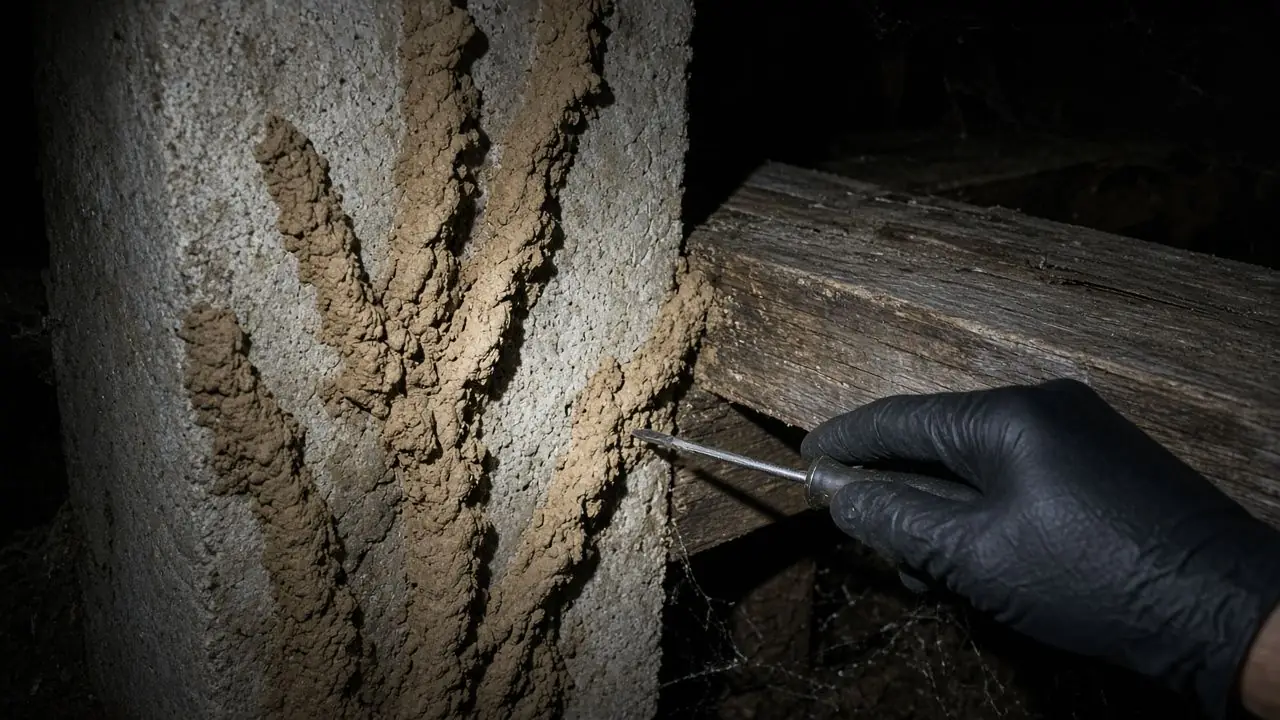
Texas A&M AgriLife Extension lists several termites in the state, but the one that does most of the damage around Paris is the subterranean termite. It lives in moist soil, eats wood from the inside out and needs that soil contact to stay alive. That is why it builds mud tubes. The tubes keep the workers damp and hidden as they travel from the ground to your sill plate.
Here is what to watch for:
- Swarmers: winged termites that come out on warm days after a rain, most often from late winter into spring. They shed their wings fast, so a pile of wings on a window sill is a strong clue.
- Mud tubes: pencil wide tubes on piers, foundation walls, pipes or the inside of a garage wall.
- Hollow wood: tap a baseboard or door frame with a screwdriver handle. Damaged wood sounds dull or papery.
- Bubbled paint or sagging drywall: termites can feed right behind the paper face of drywall.
Swarmers often get mixed up with flying ants. Termites have a thick waist, straight antennae and wings that are all the same length. Ants have a pinched waist, bent antennae and front wings longer than the back ones.
Why Paris Homes Draw Termites
Paris has a lot of older housing. Drive the streets off Clarksville Street, Lamar Avenue and the blocks around Bywaters Park and you will see pier and beam homes with crawl spaces, wood skirting and decades of add on rooms. Those homes have plenty of spots where wood is close to soil. Newer slab homes inside and outside Loop 286 are not safe either. Termites slip through cracks in the slab, around plumbing that comes up through the floor and where a patio or porch was poured later.
Our weather helps them out. Northeast Texas gets warm, humid summers and steady rain through the year. Wet soil against a foundation is exactly what subterranean termites want. Add old pecan stumps, firewood stacked by the back door, mulch heaped against the brick and a gutter that dumps water at the corner of the house, and you have a termite buffet.
How Your Technician Treats Termites
There are two main tools, and a good technician picks based on the house, not on what is easiest to sell.
- Full inspection
Your technician checks the outside of the foundation, the garage, porches and any crawl space. They look for mud tubes, damaged wood, moisture problems and wood to soil contact. They also look for spots that would make treatment hard, like a well, a cistern or a French drain.
- Liquid soil treatment
A termiticide is applied to the soil in a trench around the foundation and, when needed, through small holes drilled in slab areas such as porches. The EPA notes that soil treatments create a treated zone that termites contact as they travel. Many products used today are not repellent, so termites pass through without noticing and carry the active ingredient back to the colony.
- Bait stations
Stations go into the ground around the house at set spacing. Termites find the bait, feed and share it with the colony. Baits take longer to work, but they use much less product and suit homes near wells, creeks or ponds where soil treatment is limited.
- Repairs and moisture fixes
Your technician will point out the conditions that invited termites in. Common fixes are pulling mulch back from the brick, fixing a leaky hose bib, adding gutters or splash blocks, and getting wood skirting or steps off the dirt. Wood repair is a carpenter's job, and your technician will tell you if a beam or sill looks weak.
- Follow up checks
Termite work is not one and done. Ask how often the home will be checked, what happens if termites come back and what paperwork you get.
Termite Inspections for Home Sales
If you are buying or selling a home in Paris, the lender may ask for a wood destroying insect report. In Texas this is an official form, and it must be done by a pest control business licensed by the Texas Department of Agriculture. The report covers visible signs of termites and other wood destroying insects on the day of the inspection. It does not promise there is no hidden damage behind walls.
Plan ahead. Get the inspection done early in the option period so there is time for treatment if the report shows active termites.
What You Can Do Today
You cannot termite proof a house by yourself, but you can make it a lot less tempting.
- Keep mulch and soil at least a few inches below the top of the foundation and off the brick or siding.
- Store firewood off the ground and away from the house.
- Fix dripping outside faucets and air conditioner lines that keep one spot wet.
- Clear old stumps, landscape timbers and form boards near the slab.
- Keep crawl space vents open and clear so the area under the house can dry out.
Do not spray store bought bug killer on a mud tube and call it fixed. That kills a few workers in the tube while the colony keeps feeding somewhere else. Leave the tube alone until your technician sees it. It is the best clue to where they are coming in.
Questions About Termite Control
How do I know if I have termites or flying ants?
Look at the waist, antennae and wings. Termite swarmers have a thick waist, straight antennae and four wings of the same size. Flying ants have a pinched waist, elbowed antennae and larger front wings. If you can catch one in a jar, your technician can tell you for sure.
When do termites swarm in Paris, TX?
Most swarms show up from late winter through spring, often on a warm, calm day after a rain. Swarms can also happen indoors in winter when a heated home warms the soil under the slab.
Is termite treatment safe for my family and pets?
Products used for termite control are registered with the EPA and must be applied as the label says. Ask your technician which product they plan to use, how it is applied and when kids and pets can be back in the area. The National Pesticide Information Center also answers questions about specific products.
Which is better, bait stations or liquid treatment?
Both work when done right. Liquid treatment often acts faster. Baits use less product and fit homes near wells or water. Many technicians suggest one based on the slab, the soil, the water nearby and how bad the activity is.
Does homeowners insurance cover termite damage?
Most policies do not, because insurers treat termite damage as a slow problem that care could have prevented. Check your own policy to be sure.
Same day service option
Get a Termite Inspection in Paris
If you have seen swarmers, mud tubes or soft wood, do not wait for next spring. Send the short form and a local technician will reach out to set an inspection and walk you through the options in plain English.
More services
Other pest control services in Paris, TX
Bed Bug Treatment
Inspection, heat and targeted treatment for bed bugs in homes and rentals.
Rodent Control
Exclusion, trapping and tamper resistant bait stations for mice and rats.
Roach Control
Baits, growth regulators and crack treatments for German and American roaches.
Spider & Scorpion Control
Recluse, black widow and bark scorpion inspection and treatment.
Wasp & Bee Removal
Safe removal of wasp and yellow jacket nests, with honey bee relocation advice.
Ant Control
Fire ant yard programs and indoor ant baiting that reach the colony.
Mosquito Control
Yard treatments and breeding site cleanup for a more usable back yard.
Wildlife Removal
Raccoons, squirrels, armadillos and snakes removed and entry points sealed.
Sources
- Texas A&M AgriLife Extension, Insects in the City: Termites
- U.S. EPA: Termites: How to Identify and Control Them
- National Pesticide Information Center: Termites
- Texas Department of Agriculture: Structural Pest Control Service