Wildlife Removal · Paris, TX
Wildlife Removal and Animal Control in Paris, TX
Living near pastures, creek bottoms and big shade trees means sharing space with critters. That is fine until a raccoon moves into the attic or an armadillo tears up the flower bed.
- Same day service option
- Free inspection request
- Paris · Lamar County
Quick answer
Wildlife removal in Paris means getting the animal out safely, cleaning up after it and sealing the spot it used to get in. A technician identifies the animal by its signs, uses traps or one way doors, and repairs the entry. If you are searching for animal control in Paris TX for a stray dog or cat, that is a job for the Animal Control Division of the Paris Police Department. For raccoons, squirrels, opossums, armadillos and snakes around your home, Paris Pest Control connects you with a local technician.
Common Wildlife Problems Around Paris
- Raccoons: they tear into attics through soffits and roof vents, raid trash cans and pet food, and use chimneys as dens.
- Squirrels: with pecan trees and oaks all over town, squirrels are everywhere. They chew into attics at roof lines and gable vents, often in late winter when they nest.
- Opossums: they move under decks, sheds and pier and beam homes. They eat pet food and garbage.
- Armadillos: they dig holes in lawns and beds looking for grubs and can burrow under slabs, porches and sidewalks.
- Skunks: they den under decks and buildings. Odor is the first sign.
- Snakes: most snakes around Paris, like rat snakes and garter snakes, are harmless and eat rodents. Copperheads and cottonmouths do live in the area, mostly near wooded edges, creeks and water.
Texas Parks and Wildlife has a page on living with nuisance wildlife that explains how to cut down what draws animals to your place.
Signs of an Animal in the House
- Thumping or scratching overhead at dawn or dusk.
- Chewed or bent soffit, vent covers or shingles.
- Droppings in the attic, on the roof or by the chimney.
- Torn insulation or a strong smell.
- Holes along the foundation or under a slab.
What Your Technician Will Do
- Identify the animal
Tracks, droppings, damage and the time of day you hear noises all help tell what is living there.
- Find every entry point
Your technician checks the roof line, soffits, vents, chimney, foundation, crawl space and any gaps under porches.
- Remove the animal
Depending on the animal and the law, removal may use live traps or one way doors that let the animal leave but not come back. Spring and early summer are baby season, so your technician will check for young before sealing anything.
- Seal and repair
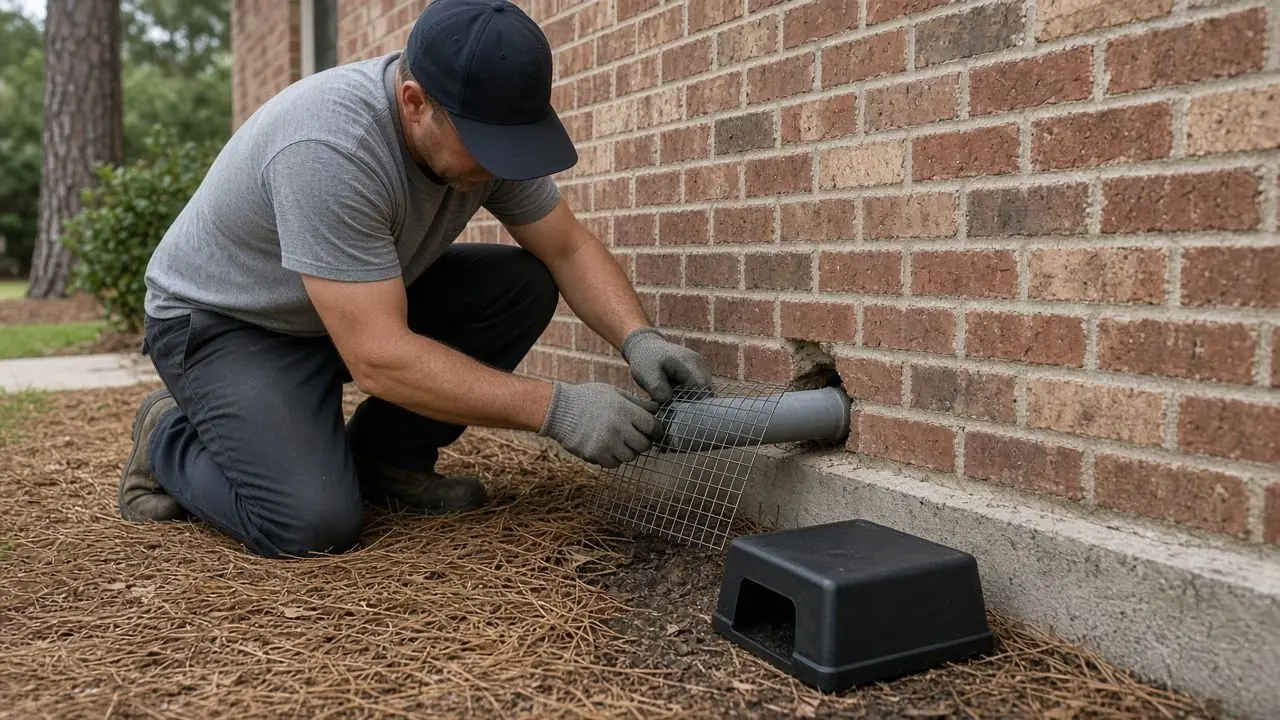
Openings get closed with sturdy materials like metal flashing, hardware cloth and vent guards. Chimney caps keep raccoons out of the flue.
- Clean up
Droppings and soiled insulation can carry germs and parasites. Your technician can explain cleanup, and the CDC has steps for safe cleanup of animal waste.
Snakes in the Yard
Snakes go where food and cover are. Mice in the shed, frogs by the pond and tall grass give them reasons to stay. To make your yard less inviting:
- Keep grass mowed and brush cleared near the house.
- Move wood piles and junk off the ground and away from the house.
- Seal gaps under doors and in the crawl space.
- Control mice and rats, which are what draw many snakes.
If you are not sure if a snake is venomous, leave it alone and keep kids and pets back. Most bites happen when people try to kill or handle a snake.
Keep Wildlife From Coming Back
- Use trash cans with locking lids and keep them in the garage until pick up day.
- Feed pets inside and pick up bowls at night.
- Trim tree limbs at least several feet away from the roof.
- Pick up fallen pecans and fruit.
- Cap the chimney and screen roof vents.
- Close gaps under decks and porches with buried wire mesh.
Wildlife Removal Questions
Who do I call about a stray dog or a loose cow?
Stray dogs and cats are handled by the Animal Control Division of the Paris Police Department, which runs the city animal shelter, and livestock on the road is a call to local law enforcement. This service handles wild animals around homes and buildings.
Can I just poison the raccoon or squirrel?
No. Poison is not legal or safe for these animals, and a dead animal in the wall will smell for weeks. Removal and sealing is the right fix.
Why do I hear animals in the attic at night?
Raccoons and flying squirrels are active at night. Gray and fox squirrels are active at dawn and during the day. The timing helps your technician tell what is up there.
Are armadillos dangerous?
They are not aggressive, but they can carry the germ that causes leprosy, so do not handle them. Their digging is the main problem.
What if I find a bat in the house?
Do not touch it with bare hands. Bats can carry rabies. Close the room off and call for help. If anyone may have been bitten or woke up with a bat in the room, talk to a doctor right away.
Same day service option
Get Wildlife Removal in Paris
If something has moved into the attic, the crawl space or under the porch, send the short form and a local technician will reach out about an inspection.
More services
Other pest control services in Paris, TX
Termite Control
Inspection, soil treatment and bait systems for subterranean termites.
Bed Bug Treatment
Inspection, heat and targeted treatment for bed bugs in homes and rentals.
Rodent Control
Exclusion, trapping and tamper resistant bait stations for mice and rats.
Roach Control
Baits, growth regulators and crack treatments for German and American roaches.
Spider & Scorpion Control
Recluse, black widow and bark scorpion inspection and treatment.
Wasp & Bee Removal
Safe removal of wasp and yellow jacket nests, with honey bee relocation advice.
Ant Control
Fire ant yard programs and indoor ant baiting that reach the colony.
Mosquito Control
Yard treatments and breeding site cleanup for a more usable back yard.
Sources
- City of Paris: Animal Control
- Texas Parks and Wildlife Department: Nuisance wildlife
- CDC: How to Clean Up After Rodents
- Texas Department of Agriculture: Structural Pest Control Service